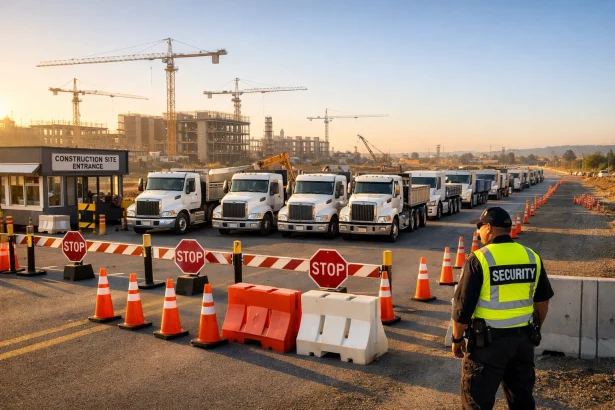
Construction sites are prime targets for theft, vandalism, and unauthorized access. You’re managing heavy machinery worth thousands, stockpiles of valuable materials, and tools that disappear in seconds. Yet most construction managers unknowingly leave their sites vulnerable through preventable security mistakes.
The average construction site theft costs companies over $400 million annually. Your next project doesn’t have to become another statistic. We’ve identified seven critical security failures that leave construction sites exposed: and the proven fixes that protect your investment.
Mistake #1: Skipping the Risk Assessment
You wouldn’t start construction without blueprints. Yet many site managers launch projects without comprehensive security assessments.
The Problem: Every construction site has unique vulnerabilities. Your downtown renovation faces different threats than your suburban development. Without identifying these specific risks, you’re guessing at security needs.
The Fix: Conduct a thorough risk assessment before breaking ground. Identify vulnerable access points, high-value equipment locations, and potential blind spots. Map out where theft is most likely and which areas need priority protection.
Update this assessment at each major milestone. Your security needs during excavation differ dramatically from fit-out phases. As your site evolves, your security strategy must adapt.

Mistake #2: Weak Access Control Systems
You’re trusting chain-link gates and padlocks to protect millions in equipment. That’s not access control: that’s an open invitation.
The Problem: Standard temporary fencing takes minutes to breach. Without proper access management, you can’t track who enters your site or when. Unauthorized visitors walk straight to your most valuable assets.
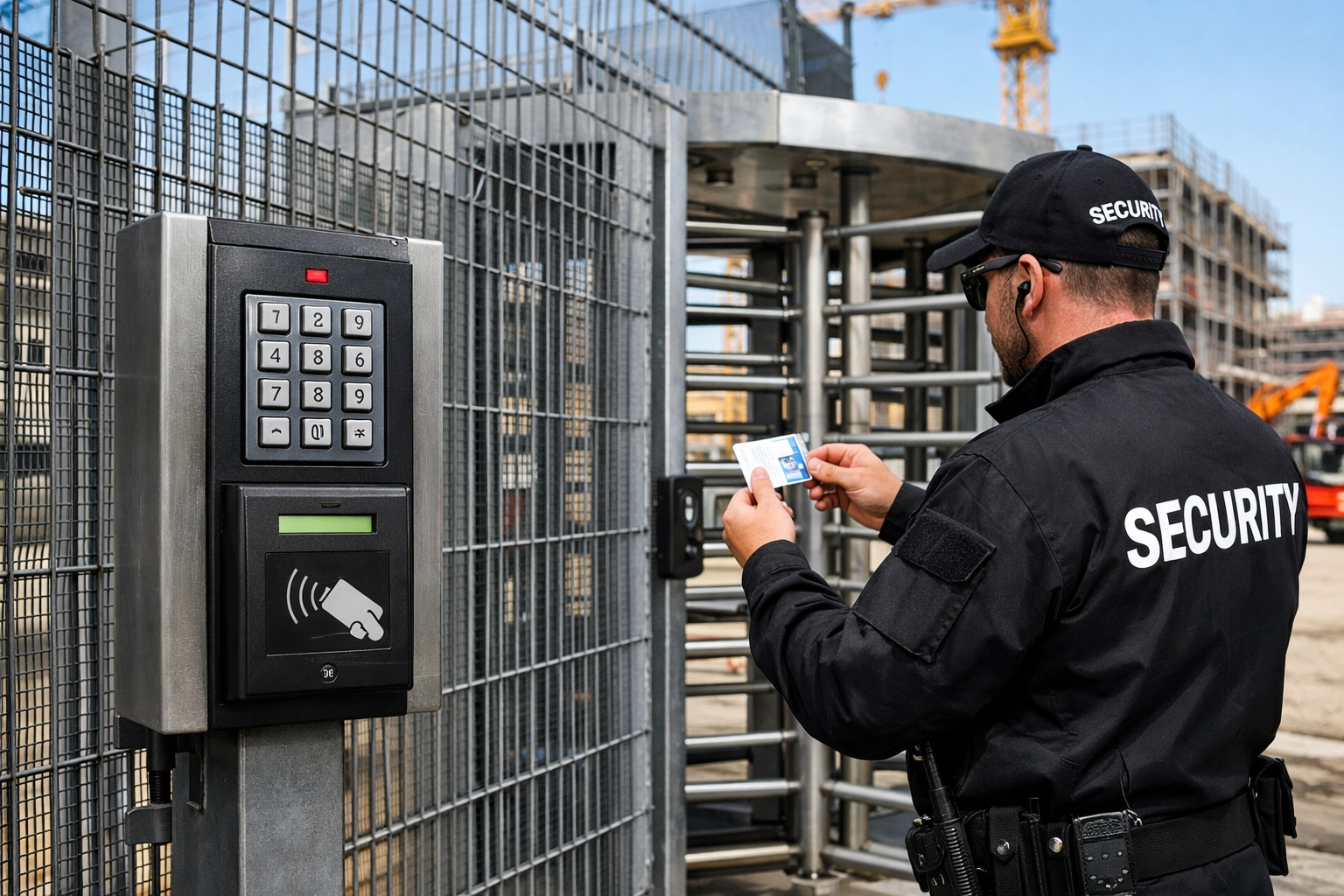
The Fix: Implement layered access control throughout your site. Start with perimeter security: heavy-duty fencing with anti-climb features. Add security gates with electronic access systems at main entry points.
For high-value zones, deploy advanced access control. Site offices need key fobs or swipe cards. Tool containers require digital keypads with regularly rotated codes. Material storage areas benefit from biometric scanners for your most critical assets.
Track every entry and exit. When equipment goes missing, you’ll know exactly who had access and when.
Mistake #3: Inadequate Surveillance Coverage
You installed a few security cameras and called it done. But grainy footage of a shadowy figure doesn’t prevent theft or identify perpetrators.
The Problem: Poor-quality CCTV systems fail when you need them most. Cameras positioned incorrectly miss critical areas. Systems without active monitoring simply record crimes as they happen.
The Fix: Deploy high-definition cameras strategically across your entire site. Position them to eliminate blind spots, especially near equipment storage, material stockpiles, and entry points.
Ensure cameras capture clear, identifiable footage in all lighting conditions. Motion-activated recording extends storage capacity while flagging unusual activity. Connect your surveillance to back-to-base alarm systems. When suspicious activity occurs, you receive immediate alerts. Real-time monitoring means real-time response: not discovering theft the next morning.
Mistake #4: Underestimating Perimeter Security
Your temporary fencing satisfies basic requirements but provides minimal actual protection. Standard panels are easily climbed, cut, or simply pushed over.
The Problem: Weak perimeters invite trespassers. If getting onto your site is easy, criminals will test your defenses. Every security measure inside your perimeter becomes irrelevant when the perimeter itself fails.
The Fix: Upgrade to security-rated fencing designed for construction environments. Heavy-duty mesh wraps and anti-climb extensions make unauthorized entry difficult and noisy. You want breaches to be obvious and time-consuming.
Deploy motion-activated security lighting to eliminate shadows where intruders hide. Bright lights deter casual trespassers and make serious attempts highly visible. Post clear warning signage about surveillance and security patrols. Deterrence starts before someone reaches your fence line. Make your site an unappealing target, and criminals move on.
Mistake #5: Operating Without Security Personnel
You’re relying entirely on passive security measures. Cameras record crimes, but they don’t prevent them. Fences slow intruders, but they don’t stop them.
The Problem: Without trained security personnel, your site lacks active threat response. Equipment theft takes minutes. By the time you discover the loss, perpetrators are long gone.
The Fix: Deploy professional security guards from a reputable security guard company like LT Olds Security. Trained personnel provide the human element that technology alone cannot replace.
Use static guards at critical control points: main gates, site offices, and high-value storage areas. They verify credentials, control access, and provide visible deterrence. Supplement static positions with mobile patrols covering larger areas at irregular intervals. Unpredictable patrol patterns prevent criminals from timing their activities. For enhanced detection capabilities after hours, consider K9 units specialized in perimeter security.

Professional security personnel don’t just respond to incidents: they prevent them. That’s the difference between documenting theft and stopping it.
Mistake #6: Poor Equipment and Asset Management
You have thousands of dollars in equipment scattered across your site. Can you account for every piece right now? Most construction managers can’t.
The Problem: Without systematic tracking, equipment disappears gradually. Small tools vanish daily. Heavy machinery gets relocated or stolen. You discover losses only when you need specific items.
The Fix: Implement comprehensive asset management systems before equipment reaches your site. Mark all tools and machinery with unique identifiers. Thieves avoid marked equipment because it’s traceable.
Secure valuable items in locked areas when not in use. Leaving equipment unsecured overnight is an invitation to theft. Tool containers with electronic locks and alarm systems protect smaller items.
Maintain detailed inventory management systems. Digital tracking lets you know what equipment is on-site, who’s using it, and where it’s located. Regular audits catch discrepancies immediately.
For heavy machinery, GPS tracking provides real-time location monitoring. If equipment moves off-site unexpectedly, you receive instant alerts. Recovery becomes possible when you know where to look. Equipment theft peaks during excavation phases when machinery concentration is highest. Protect your assets from day one.
Mistake #7: Static Security Throughout the Project
Your security plan looks the same from groundbreaking to completion. But your site doesn’t stay the same: why should your security?
The Problem: As construction progresses, site values fluctuate dramatically. Materials arrive in bulk. Expensive systems get installed. Your original security measures may not match current risk levels.
The Fix: Scale security measures alongside project progression. During excavation, focus on equipment immobilization and perimeter security. Thieves target heavy machinery most during this phase.
As framing begins, tighten access control around bulk materials like lumber and steel. These items are easily stolen and resold. Increase surveillance of material storage areas. During fit-out, add internal cameras and boost on-site guard presence. High-value items like copper wiring, HVAC systems, and appliances attract sophisticated theft operations. This phase demands maximum security vigilance.

Review your security plan monthly. Adjust personnel schedules, camera positions, and access controls to match current site conditions. Flexibility prevents security gaps as your project evolves.
Document Everything
Comprehensive documentation transforms your security system from reactive to proactive. Record all security procedures, assessment results, and incident reports. When incidents occur, detailed documentation provides evidence for investigations and insurance claims. Training new personnel becomes streamlined with written protocols. Your security knowledge doesn’t disappear when personnel change.
Protect Your Investment Today
Construction site security isn’t optional: it’s essential business protection. Every security failure costs you money, delays your schedule, and damages your reputation. At LT Olds Security, we specialize in construction site protection that adapts to your project needs. Our trained security professionals understand the unique challenges construction managers face. We provide comprehensive security solutions: from risk assessments through project completion.
Don’t wait for theft to prove your security inadequate. Protect your construction site, your equipment, and your bottom line. Visit LT Olds Security today for a free security assessment. We’ll identify your vulnerabilities and design solutions that keep your site secure.
Your project deserves professional construction site security. Contact us now to discover how we protect what you’re building.
Book a quick 30-minute appointment: https://calendly.com/ltoldssecurity-support/30min